
The covid-19 pandemic has taken a toll on the world. Children were able to be greeted by their teachers as well as having face-to-face conversations with their friends. Unfortunately, education took a turn down a remote learning path that both students and teachers needed to adapt to. With learning being strictly online there was a lot of uncertainty and hesitation as they were unsure how well children were going to adapt.

As we continue remote learning for children, not only are their academics at risk, but they are losing the use of proper social skills as well as jeopardizing their mental health. Children being asked to learn remotely through digital measures has become challenging for many. Previously, Ipads and computers were used as a luxury device to pass some time. Now they have become an educational necessity that not everyone can afford. This puts children at risk academically as teachers are unable to provide that physical in person support.

Completing school at home creates a higher possibility of distraction. Surrounded by toys, game consoles, pets, and siblings, children gravitate to remove themselves from their learning space and onto something else. Sitting for countless hours throughout the day without much of an opportunity to play with friends puts them in a state of frustration.

Amongst educational struggles during class hours, some children are in a safe and secure environment whereas others may be in a darker place. An online class provides barriers for teachers to understand what children are going through and if they need any support, especially if cameras remain turned off. Remote learning has ample challenges in children's education and social needs.
Vanessa Duarte @ NU
As a teacher today, it is their duty to create an inclusive classroom environment. Teachers often find a comfortable teaching method for them which can result in a curriculum that may not benefit all students' learning needs. Often mainstream classrooms are curriculum focused, that when placing children with diverse needs in the classroom it may result in inclusivity not being met.

When focusing on an inclusive classroom teachers need to develop a classroom setting, programs, activities, and design for all students to work together. It is key to focus on a child's diverse needs by understanding the child's strengths and challenges to respectfully support them. Creating this environment for students removes obstacles that can easily lead to exclusion.

Inclusivity in the classroom creates a classroom setting where all students are welcomed whether they have a different background or diverse needs. Having said that, this means that inclusivity is not forming a classroom that will isolate these children from their friends.

Through inclusion teachers will work to create a classroom of full equal participation, provide a sense of belonging, provide guidance and support, and provide curriculum instruction through different teaching methods to support everyone's learning abilities.

Every child has a unique learning strategy, and it is extremely important to take this into consideration to support every child to reach a high academic standard without going through daily obstacles and challenges. Work together to make a classroom change for the better.
Vanessa Duarte @NU
While some students have thrived in online learning, many feel disengaged, stressed and lonely with its challenges. Last year, while elementary schools were going in and out of distance learning, I tutored a young Grade 6 student. She would spend 6 hours in an online classroom, with another 2 hours tutoring (with me) right after. Although she loved the ability to wake up 5 minutes before class and open her Google Classroom, she found it exhausting to stay motivated and engaged in her learning. This lack of engagement followed her into our tutoring session. As we worked together, we found ways to increase her engagement and love for learning. Here are three ideas I found most helpful as we move into the new school year:
1. Have lots of different activities planned for each session, so students do not have to stay focused on one task for too long. For instance, I would create lesson plans with a mix of homework help, math and literacy games or worksheets, and a 'reward time' near the end for the student to choose an activity they want to do (e.g. https://www.mathsisfun.com/links/index.html has an abundant of math practice questions organized by grades and topic).
2. Utilize games to learn important skills while having fun doing so (e.g. https://www.education.com/games/ has lots of educational games for kids in various subject matters).
3. Integrate popular culture into the session and build activities around it. In my sessions, I would use Pixar shorts to focus on literacy. I would play the video and create a list of questions to focus on comprehension (characters, setting, problem, resolution).

Hope these tips help!
EmilyR@NU (OTECA)
Check out PebbleGo: https://www.pebblego.com
PebbleGo is a curricular content hub specifically designed for K-3 students. Packed with informational articles, ready-made activities, and literacy support for students of all abilities, it boosts engagement and fosters independent learning in core subject areas.

PebbleGo is subscription-based and gives members access to a database of free nonfiction articles for kids. There are high-interest, informational text, that students in elementary school use to read about a variety of topics.

Written by Julia. G @ NU
Technology has evolved and made our world what it is today. We live in a world where we have access to an abundance of readily current information, the ability to collaborate with others from anywhere in the world and most importantly, a form of teaching in education. Additionally, technology promotes global awareness which is an essential component to 21st century education.

Most recently, there has been a sudden shift in education. Technology has become the utmost important tool in learning that can support and transform education in many ways. First and foremost, technology enables children to adjust to their own pace of learning. Students who need more time on a task can do so until they understand the concepts provided. This also gives teachers the chance to help children who require more support on an individual level. On another note, technology enables students to explore new subjects and gain a deeper understanding of difficult concepts.
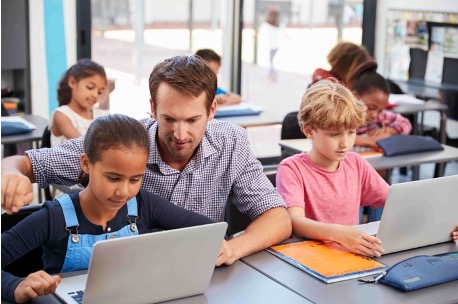
Finally, technology has begun to change the role of teachers, learners, and society as we know it. The walls of the classroom are no longer a barrier as technology enables new ways of learning, communicating, and working collaboratively.
Written by Julia. G @ NU
Looking back on what school was like when I was in it, I find much has changed. The curriculum has changed. What we thought was a strong life skill to have, no longer seems suitable for the classroom today. There are aspects of the curriculum that have never changed, yet we have taken them out of our everyday teachings.

Cursive is a core learning trait that has never been removed from the curriculum yet it has been removed from the classroom. This is a life skill to have not only inside the classroom but in everyday life. Without this trait how are we supposed to teach these children how to read the English language written in another font, or sign documents in the future.

Spelling is a trait that should have never been taken out of the classroom. Children learned a number of words throughout the week and then were tested at the end of said week. This helped those children learn how to spell those words correctly and use them in sentences. Along with weekly spelling tests, children had access to such resources as dictionaries. This taught children how to use those resources to complete a task properly. Spelling is a necessity in life and it is a skill that will never go unused.

In conclusion, we as educators choose to run our own classroom. We can choose to follow the curriculum front to back or add in our own twist. I can definitely say that these are three learning objectives I want to bring back to my classroom. I want to be able to teach my students a skill that they will use in their lives.
Olivia.T@ NU
|
Whole numbers are no better than any others!
Practice plotting values on the number line as a passionate activist rises up and demands equity for all numbers, including fractions and decimals. Number Rights addresses number and operations standards as well as the process standard, as established by the National Council of Teachers of Mathematics (NCTM). It supports students in: - Comparing and ordering fractions, decimals, and percentages
Smart educational animations, games, and interactive tools that help mid-school learners better understand math concepts
Again, a great little site ... check it out. Grade 2 samples are provided here.
|
I am sure by now most teachers have used or at least heard about Jamboard. This is a Google tool that allows the user to:
Add sticky notes, drawings, images, text and more.
Search Google and insert images or webpages.
Move images, texts, notes and drawings around on the screen easily.
Drag and resize text and images with your fingers.
Share your "jams" with others and let them collaborate.
It is a really useful tool for students to be able to interact with worksheets and projects (i.e. posters) as a digital whiteboard. As all Google Suite tools it saves automatically and teachers and students can work at the same time. Teachers can easily set up a Jamboard slide for each student to complete work on. This is much easier to keep an eye on students progress for one page tasks rather accessing their Google Slide work through Google Classroom.

From my experience, my students love being able to search google images right in the app to find pictures to illustrate their writing tasks. It also works really well during brainstorming sessions that would typically be written up on anchor charts to be hung up in the classroom. Students can use Jamboard to autonomy to present their work similarly to how a teacher would with text, pictures, drawings, and sticky notes.

Jamboard's are also manufactured to be brought into a classroom similarly to SMARTBoards and can be a physical smart board. While this is a pricey option, if your school uses Google Suite as your online learning platform, teachers should try Jamboard as an online version of a white board or black board that everyone can collaborate on.
Lauren (OTECC) @NU


FREE Resources for Teacher


