Wednesday, September 16, 2020

Kahoot for You

Kahoot is a digital online educational tool.  Since today's society is highly driven by technology this could be a great way to get children involved in the class learning.  This could be an additional fun way to supplement the curriculum.  This game is used by the teacher, they would create an account and then create questions for the students to answer.  All the questions are multiple choice, and all the students would play at the same time.  This can also encourage children to take part and be competitive with one another.  Kahoot is a game-based learning tool. It is easy to create, share, and have trivia quizzes in minutes. 

Since Kahoot is a digital tool I believe it would be better used by junior/intermediate students. They would more than likely be familiar with the use of devices, as well they are more likely to have a device available for use. Kahoot could be a great activity to use for today's digital learning.  Many children and adults are learning online now, and this game is a wonderful way to get everyone involved and participating in the class. 

Below are YouTube videos on how to set it up as an educator and how to use it in the classroom.

How to use Kahoot in the classroom Video:

https://www.youtube.com/watch?v=BJ3Er1-tCMc

How to create a Kahoot Video:

https://www.youtube.com/watch?v=KJgZZQcsSPk


Courtesy of Laila@NU

Nearpod

Today, I would like to share Nearpod.  Nearpod can be used as an "Add-On" to Google Slides, or you can create your own lesson directly from it. 

Furthermore, it is intended to be for online learning, and can also be used in environments that accept / provide electronic devices. 
Nearpod allows you to create multiple activities to engage students in the online environment. Highlights I currently use and enjoy include the "Time to Climb", matching game, and drawing function. You can also take paragraphs and omit words, sending them to a word bank. Students would have to demonstrate understanding of a text by choosing a correct word. 

There are quite a few YouTube tutorials on how to use Nearpod, but I particularly enjoy Laney Goff's contributions. 

You'll wonder how you taught without it ... make every lesson interactive!

Visit:  https://nearpod.com/

Enjoy! 
Carrie@NU

Theories on Learning

Coming from a background in Early Childhood Education, one of the biggest points put forth was to always build learning upon the interests of the children. Children learn more willingly and eagerly when the topic is of interest to them. By building upon and furthering learning through the interests of the children, educators are also showing interest in the children's learning, as opposed to guiding the learning of the children. 

Grasping the interest of children and struggling to keep them engaged in a subject that they have little to no interest in is difficult, especially throughout the Primary years of school. Though through observing, listening and questioning, educators have the opportunity to discover the interests of the children and to create learning opportunities through these interests. 


Teachers have a great opportunity to form the minds of their students, by building upon their interests and furthering their engagement and concentration in their learning. 


Brought to you by: Michelle P@NU

Tuesday, September 15, 2020

Vooks - Story Books Brought to Life

I choose Vooks to share in this blog because I believed that read stories with our children is help children gain more vocabulary, gain more reading skill, and concept necessary for reading. Children learn that texts give the reader cues to read and the picture or the animation on the page match with certain words, that pictures/animation supports the story. Reading out loud can have a great impact on a child's development and literacy.

Storytime is a great way to connect with your children/students over the timeless combination of  story and illustration, and to guide the student's understanding of the world. Vooks is an online children friendly content, ad-free streaming library for reading, animated storybooks which children really like. Vooks is provided with a model of fluent, expressive narration with effective reading aloud story time. It is the first storybook streaming service for children that makes learning to read fun! Ages 2 - 8. Vooks's books are animated with purposeful space to help maintain attention in a positive way that promotes a love of reading and a lifelong impact. Vooks's storybooks encourage parents or teachers to discuss the books they're reading on Vooks with their children/student, and Vooks even provide lesson plans for some of their books with activities to enhance the conversation. This is very good for us as a teacher to use and read with our students everyday.

Vooks also provide lesson plans which are a great resource for teachers who want to teach children to do more than just read. For example, the lesson plan provides themes, summaries, talking points, discussion ideas, activity ideas and even vocab cards.


https://www.vooks.com/?gclid=CjwKCAjwzIH7BRAbEiwAoDxxTooeJrI3hQHcEgJ6t3m-pouTL2gZUAUrJsnuomojWsYkc2w0ZLfJahoCSL8QAvD_BwE


Brought to you by: Chi N @ NU EDU436-OTECA


"Blue Eyes/Brown Eyes Exercise"

My blog post is regarding Culture & Diversity, I am using the "Blue Eyes/Brown Eyes Exercise" from Jane Elliot who has been teaching this exercise since 1968.

I have included an interview she recently had with Jimmy Fallon; she first taught this lesson on April 5th, 1968. The day after Martin Luther King, Jr was killed.

She wanted to teach something to her students as a result of his killing. No other teachers in her school did anything to talk to their students. She taught this "Blue Eyes/Brown Eyes Exercise". She divided the class between brown eyed people and blue eyed (or any other non-brown eyed) people.

https://www.youtube.com/watch?v=f2z-ahJ4uws

She said, if she had known how it would work, she probably wouldn't have done it. She lost all her friends, no teacher would speak to her, her parents lost their business. Her children were spit on, their belongings destroyed, they were mentally and physically abused by their peers, their teachers, and the parents of their peers. Teachers she spoke to that day in April didn't understand why she was teaching it. They didn't care about addressing the issue.

She has been teaching this for over 50 years.

Generations of teachers have taught this in classrooms, as noted by NPR. Think of all the people that she helped see racism and bigotry and changed their ways, or learned early that discrimination is wrong. The great impact that Jane Elliot has had on the world and teaching.

https://www.npr.org/sections/live-updates-protests-for-racial-justice/2020/07/08/888846330/we-are-repeating-discrimination-experiment-every-day-educator-says

How can we as teachers follow the lesson that Jane has set out over the last 50 years?

What can we do as teachers to help our students understand that our differences are ok and to make an inclusive classroom for all? This exercise is one way.

Nicole@NU

Mindfulness and Well-being in the Classroom

Low-level disruption, burnout, anxiety, absence and mental health problems affecting staff and students alike are on the rise. In the last seven months we have seen the rise and fall of COVID19 cases, some have lost loved ones or have known people who have experienced the virus, the injustice and lack of equality around the world .With all that is happening in the world, it is safe to say that we are all feeling some type of stress. How are we dealing with it? How are our students feeling? How can educators support students who may be feeling uneasy in the classroom? I believe the answer is simple: let's prepare students and staff with the knowledge and skills to be in charge of their own wellbeing.


I, myself believe that mental health in the classroom environment should be taken seriously and teachers should also dedicate even a small portion of their day checking in on their students or even having them participate in a five minute activity. There are countless resources available to help educators integrate mindfulness into their classrooms. As an Early Childhood Educator, when working in Kindergarten; my colleague and I always made sure that we checked in with each student in the morning and afternoon. We wanted to create a safe environment for our students to share how they were feeling and to support them to the best of our ability. One of the resources we used quite often was the 'Zones of Regulation' as it encouraged students to start using language that expressed to not only us but to their peers on how they were feeling. Checking in on our students, participating in activities as a class, validating that their mental well-being is important will encourage and support students to understand that their educators care. 


Here are some stories that you can keep in mind when talking to students about mindfulness and well-being.       

By Sarah OTECC

Monday, September 14, 2020

Importance of learning styles in the classroom

Learning Styles
As someone who aspires to be a kindergarten teacher one day, I realize the importance of recognizing the different styles of learning when it comes to child development. Each child coming into the classroom is going to be different, in the sense that not one child learns in the same way. In kindergarten, where this is the start of their educational journey, it is especially important as their teacher to understand that not all the kids in the classroom have the same learning style. 
In the past, around 40 to 50 years ago, teachers weren't aware of these differences (learning styles) and schools and classrooms were designed in a way that conformed to the teacher's way of learning. For example, if the teacher was a verbal learner who liked to read and write he/she would assume that everyone else was and that is how he/she would teach. In that situation the children who were also verbal (linguistic) learners like the teacher did well, and the other children who had different learning styles did poorly. 

As future educators it is important that we get to know our students and their specific learning styles so that we can adapt our teaching to meet their needs and set up our classroom environments in a way that is suitable and encompasses all learning styles.  


Sarah@NU-OTECA

Sunday, September 13, 2020

Cognitive Development

Exposure = Connections = Learning

With a background in Early Childhood Education and Child Development, I understand the importance of early exposure and setting the appropriate foundations in order for a child to grow and develop to the best of their abilities; the more exposure the brain gets at an early age, the more connections will be made which set the stage for optimal learning. 

As educators in the Primary/Junior Division, we are going to be teaching children in the most important years of their life. This is why we need to be mindful, patient, caring, and educated on providing children with stimuli that will be beneficial to their learning. Creating a classroom that is bright, warm, welcoming, and inclusive to all children's needs will construct the path for success! 
Cassandra @NU

Saturday, September 12, 2020

The Digital Teacher


I believe that different forms of technologies and interactive digital games can support and enhance students' academic development. When I think back to my time in elementary school the technology incorporated in my learning was very limited. Educators are committed to promote a learning environment that fosters creativity, problem solving and collaborative skills.

How about in a virtual world though? Can computer games support these skills? 

Teachers strive to incorporate different forms of technology and digital tools within their teaching practices, it is evident nowadays to see these forms of technologies being used within classroom environments i.e., iPads, chrome books and smart boards. Despite the increased access in these digital tools, I have yet to come across a class where they participate in a collaborative and interactive virtual game. As students continue to have access to these technological devices in the classroom, they will also have more options to play different educational games. I remember enjoying some of the computer games I played in elementary school but, I don't recall any of them ever being interactive, collaborative or meaningful.

Minecraft for example, is a game that allows players to create a world where they can explore, craft, build, and create anything they want using 3D blocks. The game allows for single-player and multiplayer options. Multiplayer allows gamers to collaborate, problem solve and work together in the same world to create anything imaginable. This game is also open-ended which allows gamers to make their own choices which I think positively support students' development. Minecraft offers an Education Edition which educators can use as a teaching tool in their own classroom learning. The education edition offers resources and lesson plan ideas in different curricular areas (i.e., math, science, art and language). After playing Minecraft myself, I really enjoyed the creative and imaginative elements the game offers. As a future educator, incorporating Minecraft in my own teaching practices is something new that I would like to try. Including more virtual, collaborative and interactive games I think can empower and motivate students to step outside their comfort zone and create meaningful learning experiences.

Brought to you by: Danuiella@NU

Thursday, September 10, 2020

Confidence - It will take you places

As discussed in this week's class, confidence and competence play a huge role in the classroom as well as a child's overall success. I believe that self-confidence or lack thereof, can make or break one's success. It is critical for a student to feel safe and comfortable in the classroom. It's good to make mistakes, ask questions or admit you don't know something because that is how you learn. 

When volunteering with a grade one class, there was one student who was always smiling, laughing and was engaged in almost every subject. The moment it was time to do independent reading he would act out, distract other students or refuse to read. I realized that this student had the lowest reading level in the class and it was not because he wasn't smart enough but because he lacked confidence in himself. He was not comfortable reading or writing and so this challenge became even more daunting. As other students progressed in their reading, he did not do so as quickly and so he became even more discouraged and became more disruptive. After a couple of days of working with him privately, I realized that when he was feeling confident (maybe because he had excelled in the subject prior to literacy or was having a good day) he was not only more willing to read and learn but was also doing so a faster rate than normal. 

As he began to feel more comfortable with me and in our reading space, his confidence grew and he gradually improved more and more. Building confidence and promoting hard work is more beneficial than praising fixed intelligence or competence because it allows children to better handle new challenges and encourages growth whereas the latter, instills a value system based on abilities which can be discouraging when children find a task they cannot do.

Keegan@NU

Children’s Interests

I think including children's interests is something that is extremely important throughout a classroom. Making sure a child is included and feels he/she is a part of all areas of the classroom can make a positive impact on a child's learning. Sometimes a teacher we may not realize that we have focused more on what the curriculum is and have forgotten to focus on what the child is interested in and how that can be incorporated into the curriculum to keep them engaged and interested in what they are learning.


I think by keeping a child's interest it can give the child a sense of belonging in the classroom which may allow them to learn better and participate more since they have a connection to that is being learned. 


Through this like you can learn more

https://study.com/academy/lesson/using-childrens-interests-experiences-to-promote-learning.html


Gurleen@NU

Wednesday, September 9, 2020

Curiscope - Augmented Reality Products & Teaching Tools

I taught a science summer camp to a group of students aged 2 -10 this past month with the sole direction of getting them excited about science. While researching for a lesson I was planning on the digestive system, I stumbled across this great augmented reality t-shirt by Curiscope. 

The Virtuali-tee is a shirt that when scanned by their associated app enables a 3D, interactive rendering of the interiors of the human body - with a narrative aid! The students can explore the human body... on their own human body! It will even sync up the image with your own live heart beat. It gets even better. The product was created by a collaboration of teachers and includes full teacher resources! They have some other "multiverse" posters that would be a great addition to any classroom. 

This gift is definitive on my Christmas wish list! 

You can find out more about it at https://www.curiscope.com/


Here's a photo of one of the munchkins demonstrating the Virtuali-tee app.

Sabrina@NU

Growth Mindset - The Real World


This blog post is a video which explains how each individual has a growth mind-set by training your brain to get smarter. It gives real world examples of people who started with nothing and ended up becoming one of the biggest influencers simply by having a growth mind-set. 

This video could be used in the beginning of a school year because it encourages children to be inspired and not give up!
What Is A Success Mindset? - Acquirent
                                                                                                                                                  
Courtesy of Ema@NU

Monday, September 7, 2020

The Importance of Outdoor Learning

While exploring nature's finest, on my hike today I had to stop and take a deep breath. Have you ever done that? The exhilaration of the fresh air hitting your lungs and awakening your senses. As adults we try our very best in making sure we spend at least one part of our day outdoors, whether it's just sitting enjoying a coffee or going on a short walk. Have we ever wondered how children take in the outdoors? How important is outdoor learning for children? How can it benefit a child as whole? What do they take in from the outdoors?


Working as an Early Childhood Educator, I know the importance of outdoor education and how it can benefit students and their learning. To support educators and their knowledge of outdoor learning, there are countless resources readily available. I recently came across the resource, 'The Big Book of Nature Activities' by Drew Monkman & Jacob Rodenburg. This resource provides opportunities for educators to think outside the classroom, how they can scaffold children outdoors and how they can take in the world around them. Educators can have the opportunity to encourage children to not only use natural materials but to also use technology to capture their findings outdoors. 


Let's help children expand their environmental footprint. 

"Take one child. Place outdoors in nearby green spaces. Leave for several hours at a time. Repeat daily. Sprinkle in a dash of adventure. 

Fold in a generous portion of exploration and discovery. Top with wonder and awe. Let rise…"

  • D. Monkman & J. Rodenburg

Brought to you by Sarah @NU-OTECC

Sunday, September 6, 2020

Have fun and Improve your reading with Reading Bear

Reading Bear


Reading Bear is an online resource for children to learn phonics and expand their vocabulary. The website will demonstrate how to pronounce various sounds, for example, short a, by providing words, pictures and sentences. 


To further develop the child's understanding, the system also provides rhyming words in a similar fashion to aid in forming connections. 


Finally, quizzes can be taken to demonstrate learning and form a review of the words and sounds learned through the modules.


Engaging students in online learning has proven to be a challenge for many teachers. With websites such as Reading Bear, students are provided with an opportunity to learn and improve their reading skills while having fun online. As some students prepare for a virtual school year, websites such as these are a great tool for achieving their reading goals.


This website is currently free to use and can be found at the following link: https://www.readingbear.org. 


Brought to you by Alyssa@NU


Friday, September 4, 2020

Extra Curricular Activities

Ontario schools provide students with an abundance of extra curricular school activities in which they could choose to be a part of, this includes but is not limited to, social groups, sports teams, and clubs. In addition, extra curricular activities can include outside school activities as, such as community activities, volunteering, and local clubs/sports teams. Extra curricular activities are very impactful to one's journey of life. These activities keep you busy, disciplined, and give you productive breaks. They can improve academic performance, create social opportunities and even essential life skills.

Participating in extracurricular activities, allowed me to meet teachers that turned into my mentors; teachers who taught in the classroom and coached on the court. I was able to meet teammates both in school and outside of school, who became good friends of mine and contributed to my social realm. You are never too young, or too old to get involved. The positive impact extra curricular activities have on an individual's life, remain with them forever. They inhabit skills that are transferable to many life experiences, and help build passion and leadership which are instrumental to happiness and success.

As I got older, I found it much more interesting how my extra curricular activities were looked at sometimes even more than my academics and qualifications. For example, my volunteer work was instrumental in landing a job with the police. For that reason, I found this YouTube video very informative, and interesting.
Take a look…  


How admission officers view extracurricular activities: https://www.youtube.com/watch?v=MVHy_hbKSa4
Not only would this video apply to admission officers, but also future career employers. 

Megan2@NU

The Importance of Self Esteem

Self esteem is not something that can be handed to an individual, yet something that can be facilitated. This facilitation ensures that challenges are something that enhance one's self-esteem as opposed to threatening their ego. Although this is often found in a classroom environment, self esteem is something that can be affected by outside factors, such as hobbies, feedback from a guardian, and etc.

Below is a picture of me after a soccer game when I was about 8 years old. In this photo, I was being given constructive criticism regarding the game I just played. 10 years later, I received multiple full ride soccer scholarships to D1 universities, and attended East Carolina University for my undergrad. I found that I was fortunate enough to grow up with coaches who were able to instill confidence in me at a young age through their ability to praise and criticize me.
In return, I was able to challenge myself in new situations, and strive to learn more about the game and my play in order to better myself.
I strongly believe that a child's self esteem is stemmed from effort praise, strategy praise and criticism, both inside and outside of the classroom.
Megan1@NU


Tuesday, April 28, 2020

ABCya App

The reason to why I choose the ABCya app is because it is a fun and educational app for students to use within classroom settings. The app is made up of various literacy games in order for children to build on their literacy skills. As well, the grade level that this can be used for are from kindergarten to grade 6. Personally I think that this would be a useful app to implement because instead of having to always use worksheets, students would be able to learn these skills through an interactive game.

Reference: https://www.commonsensemedia.org/website-reviews/abcya

Niagara University- Yasmin Piacenza


Sunday, April 26, 2020

I started this Facebook page called: Learning Continuity Grades K-8 for parents and children in my community.  It's a page that houses ideas for continued learning at home, give it a look and give it a like! 

angie@nu

Friday, April 24, 2020

Educational App: Birds Song Identification AI


This App happens to be extremely educational and is strongly recommended for Kindergarten to grade 4. Despite the grade levels I find that teachers could definitely go ahead and use this up to grade 6 by extending the habitats and communities topics further, but I personally found it suitable for primary and junior grades. I'm sharing this educational app on this blog post as I believe it's great to get the students hands on when doing lessons revolving around Science and technology especially when we're exploring the topics of Habitats and Communities. I find this App spectacular and super easy to use as you can download it on both Apple and Android products as it is free version and just to give you all heads up is that certain bird species apps will cost you money to purchase and download, which is why I'm informing you about this free app. Please feel free to take advantage of this unique and creative app and use it with your younger children as well when you take them to the playgrounds, trail walks, backyards, and the beautiful gardens. 

From all the aspects of this app, the one that stands out the most is that this app allows you to hear the "SOUNDS" of the individual bird species followed by paragraph describing their taxonomy, bird family, scientific bird name, physical traits, height, colour, voice, distribution and habitat, behaviour, breeding, classification (Omnivorous, carnivore, herbivore), predators, parasites, status (population), diets (what's insects/animals or food they eat), Relationship with humans. 
What is the Eurasian Eagle Owl?
The Eurasian Eagle-Owl (Bubo Bubo) belongs to the species of eagle-owl that lives in much of Eurasia. It is sometimes referred to as the world's largest owl, and they are often found in the largest numbers in areas that have cliffs and ravines are surrounded by scattering of trees and bushes. Due to the owls preferences of being in Rocky areas they are found in elevations of 2,100 m (6, 900 ft). When it comes to diet, these Owls happen to eat small mammals including voles, hares, rabbits, mice, raptors, woodpeckers, insects, seabirds and amphibians. When it comes to comparing physical features these owls; males and females have huge differences in weight, females are found to be 3.9-9.3 pounds while males are found to be 3.3.-6.6 pounds.  These species have orange eyes, and exhibit a brownish color upper body.
§  Being elementary teachers, we must find ways of motivating students to become aware of their wildlife, ecosystems and different bird species that live in them. As students are aware that bird species are spotted just about anywhere they go such as playgrounds, gardens, backyards, beaches, recess, woods, jungles, trail walks they can be encouraged to observe them and make interesting factual notes.  

§  Through practicing daily note-taking, students would enhance their knowledge and awareness on bird species and be able to connect that to their science lessons. 

§  An additional area students can focus on are understanding levels of the food chains including producers, Herbivores, Omnivores, and Carnivores, and the importance of decomposers! 
The Eurasian Eagle Owl useful websites and additional websites that are highly recommended for you to visit!
Bird Nature Study Printables. (March 17th, 2020)
Made possible by Iqura@NU

IKEA Swedish Meatballs Recipe

Swedish Meatballs 
Serves: 3–4 
Preparation time: 2 hours 10 minutes 
Cooking time: 45 minutes
Ingredients:
Meatballs 
500g beef mince 
250g pork mince 
1 onion, finely chopped 
1 garlic clove, crushed 
100g breadcrumbs 
1 egg 
5 tbsp milk 
Salt and pepper to taste 
Olive oil for frying
Cream Sauce 
40g butter 
40g plain flour 
150ml vegetable stock 
150ml beef stock 
150ml thickened or double cream 
2 tsp soy sauce 
1 tsp Dijon mustard
Method: 
For the meatballs, place beef and pork mince in a bowl and combine, using hands or a wooden spoon, until there are no lumps and the mixture is smooth. 
Add onion, garlic, breadcrumbs and egg, then mix. Add milk, then season with salt and pepper.
Roll small handfuls of the mixture into balls. Place the meatballs on a tray, cover with cling wrap and refrigerate for 2 hours.
Preheat oven to 180°C (or 160°C fan-forced). Heat olive oil in a frying pan on medium heat. Once hot, add meatballs and fry, turning them so they brown all over.
Place fried meatballs in an ovenproof dish, cover with a lid or aluminium foil, and cook in the oven for 30 minutes.
To make the cream sauce, melt the butter in a frying pan, then whisk in the flour and stir continuously for 2 minutes. 
Add the vegetable stock, beef stock, cream, soy sauce and mustard. Bring to a simmer and allow the sauce to thicken, stirring occasionally. 
Serve on its own or with mashed potatoes.

Wednesday, April 22, 2020

Thinking About Learning in a Time of Social Distancing

As we find ourselves thrown into online teaching and learning, I have found myself reflecting a lot on how we can create and implement meaningful learning experiences online. As educators, we spend so much time thinking about how we can construct these kinds of experiences in the classroom, but this becomes infinitely more complicated and difficult when trying to construct these experiences remotely. In the classroom we have the benefit of a dialogue and redirection, the ability to provide materials to the whole class. Without this give and take, it has become more necessary than ever to find online ways of learning that are:
-       Highly accessible (which becomes a much greater challenge for those in lower income brackets, and those who are younger)
-       Able to provide students with some kind of engaging and meaningful learning.
It is unfortunate that perhaps these two requirements do not always go hand in hand. What may be most accessible to students is simply sending them handouts or a list of questions, but this is not necessarily the most interesting or meaningful learning experience, and is certainly not as engaging as a discussion in the classroom. In order to make learning experiences as meaningful for students at home, so much more work is needed to be done on the part of the
Teacher – and even then, lacks the benefit of a dialogue where you can assess student's understanding throughout the lesson in order to improve their learning and answer their questions.
 I feel that this time has been such an interesting reflection of the role of technology in education. Tech can certainly enhance learning, and help provide meaningful learning experiences, but technology cannot replace the teacher, and the benefits that come from a face to face connection in education.
Courtesy of the real Lydia@NU

Monday, April 20, 2020

Math Motion

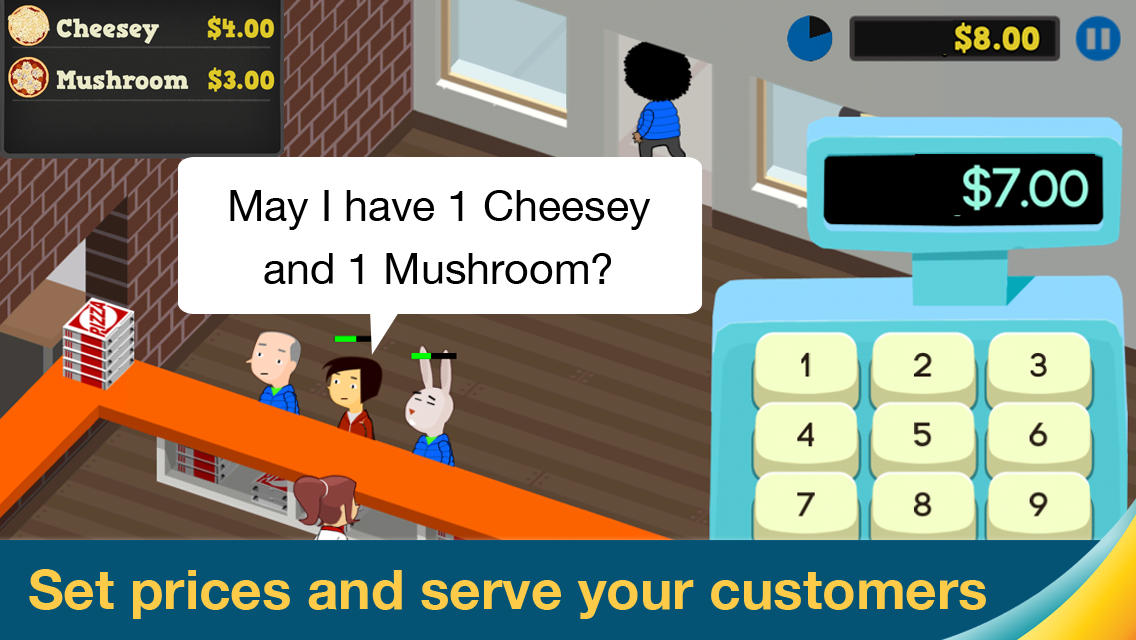
Motion Math is an innovative learning model that playfully teaches the conceptual foundations of math with interactive visuals.  It is a subscription-based app featuring math games for kids in kindergarten through sixth grade.  Students practice a variety of math skills by playing six popular Motion Math games. Students enter an access code for immediate access to over 900 levels of adaptive content/games on the web or via the iPhone/iPad app. Students can easily find their level of challenge with intuitive gameplay, built-in tutorials, and scaffolded hints.  Teachers and admins sign into our dashboard to track student usage, mastery, and factors of learning such as growth mindset.  Motion Math is easy to get started in classrooms and doesn't require any special technical knowledge or setup. 
Motion Math: Pizza! | | BestAppsForKids.com
The site provides technical and instructional support with live chat and phone help during business hours. The dashboard allows teachers to see how students are progressing in concepts strands based on their performance in games. Teachers can also monitor student activity in real-time to gain visibility into which games students are playing at which difficulty levels.  This application is also great for special education students as the application uses a highly visual form of instruction. Most games require little or no reading, even at high levels of complexity. The games are independent and self-paced.  The games are cchallenging without a sense of failure. A subscription to Motion Math cost $2.99 per month or $20.99 per year.  However, there is a 7-day trial to see if the application is worth purchasing.

Brought to you by: Catherine@NU