Friday, January 27, 2023

Inquiry Based Learning

INQUIRY-BASED LEARNING

WHAT IS INQUIRY-BASED LEARNING?

·       Student-led approach to learning – Let the students pick a topic and guide their own learning!

·       Encourages students to ask their own questions instead of telling them what they need to know.

·       Best taught with enthusiasm

FOUR TYPES OF INQUIRY-BASED LEARNING

1.     Structure Inquiry: Students follow the lead of the teacher, who introduces an essential question and then guides students through specific activities, resources, and assessments.

2.     Controlled Inquiry: Students explore one question from several different questions generated by the teacher using a selection of resources selected by the teacher.

3.     Guided Inquiry: The teacher introduces topics and students begin to formulate their own questions/ select their own resources to research answers.

4.     Free inquiry: Students design their own questions, select resources, and select an assessment tool to demonstrate what they have learned.

USING INQUIRY-BASED LEARNING IN THE CLASSROOM

·       Genius hour

·       Classroom debates

·       Field Trips

·       Independent research projects

·       Library visits

BENEFITS OF INQUIRY-BASED LEARNING

·       Enhances learning retentionà Subjects that personally interest a student = more likely to learn

·       Fosters curiosity

·       Encourages inquiry skills + research methods

·       Creates a love of learning


If you prefer to watch a video on inquiry-based learning here is a great one!


https://www.bing.com/videos/search?q=quiry+based+learning&&view=detail&mid=BCAF9F6A9634547D8E77BCAF9F6A9634547D8E77&&FORM=VRDGAR&ru=%2Fvideos%2Fsearch%3Fq%3Dquiry%2Bbased%2Blearning%26FORM%3DHDRSC4


Brought to you by @JackieO NU 😊

Thursday, January 26, 2023

The Future of Education: The 7Cs, 3Rs & 3Ms of 21st Century Learning

A classroom needs to be a laboratory for exploration and no longer worksheet and scantron factory. Some contrarians may argue that this is only furthering the globalism that is hurting some people, but it would be more detrimental to ignore those changes than to prepare for them. We need to instruct more in skills and character necessary for success not just for future careers, but also to create better human beings as part of a better society. So let’s dig into which traits will remain essential.

Into that challenge of addressing future-learning comes the exploration of global skills that will be necessary across all fields and enterprises in this new world. Those discussions ultimately lead to the recognition of the 4 Cs which would evolve into the 7 Cs of 21st-century learning all spearheaded by the Partnership for 21st-Century Learning. The expansion to 7 included the inclusion of the additional life, career, and media skills, all of which are identified as the most important in modern education. There has been some disagreement about what words should be used to connote those skills, but I am using those found in the book called 21st Century Skills: Learning for Life in Our Times. The other terms, as I will show actually fit inside other skill areas. 

You will also note that of the 7 Cs, not one them is content. Again, it’s not meant to demean content, but rather that the necessary skills are supposed to be applicable across content areas.

In looking beyond the essential skills we begin to think about both the type of person we want students to become to succeed and the type of environment we need to create to make that learning possible. The 3 Rs (not my idea) are character traits that we hope to consistently encourage and the 3 Ms (my idea) are the way we make our classroom effective in those efforts.

Do you want to learn more about this? This is just a snippet of the whole article. 

Click here for more >>>> The Future of Education

Brought to you by Friends of NUO

The Importance of Technology in Classrooms

Technology is an essential tool that all educators should be using in their classrooms. Technology allows both teachers and students to expand their knowledge when learning any new piece of information. Essentially, students make more meaning out of their learning as they are allowed to play educational games, create powerpoint presentations, use google classrooms, etc. Technology leads to better student engagement and focus as children learn best when the lesson being presented to them is fun and engaging.

Top reasons to have technology in classrooms:


1.Technology creates an engaged classroom environment. Students are more engaged in fun activities that requires them to use all their senses. Students have a better focus when they are given opportunities to practice their learning in fun ways through use of technology such as educational games.


2. Technology incorporates different learning styles. Technology accommodates different learning styles. For example, technology assists visual learners as powerpoint presentations highlight key words, key points and includes diagrams to help students learn the concept better. 


3. Technology improves collaboration as students may work with peers to create presentations, play educational games, etc.


4. Technology teaches students important skills that they can use in the future. With technology, students learn to use tools like powerpoint, excel, Microsoft word that they will also be using in the future. As a result, students build confidence as they master to use these digital tools. As well as, students learn about computer literacy, cybersecurity, keyboarding, internet use and privacy. 


Courtesy of Raveen@NU-OTECA

Wednesday, January 25, 2023

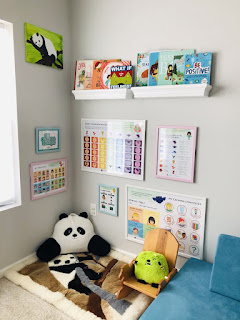
Creating a Calm-down Corner in Classrooms

Students can be feeling sad, upset, anxious, angry or any other negative feeling. A way we can help them learn to self-regulate is by creating a Calm-down Corner where students can go to and refocus so they can join the learning again. 


Some ideas on how to build and effectively use one in your classroom may include:

·      Creating a safe and cozy place (rugs, pillows, stuffed animal)

·      Providing guides to calm down (feelings/emotions chart, zones of regulation, pictures of breathing exercises) 

·      Offering calming books

·      Providing fidget toys (pop-its, sensory toys, puzzles)

·      Tablet with mindfulness apps & videos

·      Sensory Stimulation (Dimmer lights, headphones for noise-cancellation) 


Here is a link to a breathing exercise: https://www.youtube.com/watch?v=fTzXFPh6CPI


If you want to know more, you can click this link for information on creating Calm-down Corners: https://www.actionforhealthykids.org/activity/calm-down-corner/


Brought to you by SarahM@NU J

Artificial Intelligence: ChatGPT in Schools

Artificial intelligence (A.I.) is making its way into everything we do and Education is not immune to its effects. Schools must adapt to all kinds of A.I. tools which are becoming rapidly available and accessible to students. One example is the new ChatGPT tool. OpenAI has created a new chatbot that has the ability to write essays or papers on any given subject, solve math equations and formulas, break down science problems, and even produce computer code languages. What does this mean for teachers? Many educators all over the world are panicked over ChatGPT's ability for students to get away with cheating, plagiarism, and rendering the idea of homework completely obsolete. 


ChatGPT, Chatbots and Artificial Intelligence in Education - Ditch That  Textbook


In my opinion, ChatGPT may be used as a teaching aid rather than a threat to education. This A.I. tool could allow students to unlock their creativity, be used as a tutoring resource that works for them, and allow them to become more akin to using A.I. tools in the future as the world becomes more technologically advanced. 


More info on ChatGPT: 

https://www.forbes.com/sites/rashishrivastava/2022/12/12/teachers-fear-chatgpt-will-make-cheating-easier-than-ever/?sh=1a1fdf3e1eef 


What do you think about this bot? 


KarishmaC@NU


How to Keep Students Engaged When Teaching

How to Keep Students Engaged When Teaching

After teaching and working with students over the last few years, I had the opportunity to observe students when learning in class. I have acquired knowledge on what kept students engaged that I would like to share with you all today. 

Two suggestions I have for teachers are:
1. Shortening/breaking up lessons
2. Teaching using different methods

1. Keeping lessons short or breaking them up. 
I noticed that when students are told to sit quietly and listen for long periods of time, they have difficulty staying focused because they cannot sit for that long. One thing I suggest for teachers to consider is cutting lessons down when teaching. If a lesson cannot be cut down, I would suggest breaking it up, giving the students a break in between or completing an activity will allow them to move around, so when you go to teach again, they can bring their focus back to the lesson.

2. Teaching using different methods
As an ECE, we have learned about different ways students learn; when teaching, I believe that is important to consider. Through teaching, teachers can create lessons that involve students working in small/large groups, hands-on activities, and more. I believe that lessons should not always involve a teacher using a presentation to teach them information. For example, the teacher could have the students work in groups and go through a chapter in a textbook to find information on the subject they are learning about. This allows the students to learn by communicating and working together for more information about the subject they will be discussing. 


For more information on ways to engage students, check out this link!

NicoleR@NU

Tuesday, January 24, 2023

CrashCourse - Using Videos to Make Learning More Fun

Research has shown that more than 65% of students are visual learners. Meaning most of our students need to see what they are learning to retain it. I'd like to introduce you to CrashCourse.


CrashCourse is a Youtube channel for students, adults, educators, and parents. The channel's goal is to help people learn new things, know things, and gain a deeper understanding of themselves and the world around them. There is a second channel called CrashCourseKids for Primary learners. They also have helpful infographics for subjects - these are great tools to hang up in your classroom.


These videos can help students prepare for a test, help teachers brush up on a subject or even use them during their lesson plan. The channel covers chemistry, literature, psychology, history and so on. The videos are less than 15 minutes and are student-friendly.


CrashCourse even has a user-friendly website for all educators. You can visit their site here: https://thecrashcourse.com/about/. The website has a "courses" tab where you can find an abundance of subjects to choose from. Once you have chosen your subject, you will be brought to a page with all the videos that are relevant to your subject area.


Using videos as visual aids help students stay engaged in a lesson, helps with digital literacy, and students can review the video later if they need a refresher.


Insert video: https://youtu.be/owHF9iLyxic


Here is an example from CrashCourseKids, "What's an Engineer?".The video uses visual aids, probing questions and relating the subject to the community - creating an excellent resource for students. CrashCourse gives primary students a visually stimulating introduction to what an engineer is. This is a great way to begin a lesson on engineering, this allows students to get excited about the subject and get a better understanding of the lesson at hand. As an educator you can even use the video in parts, you can pause at every question and work through the problem as a class, and have your students solve the question themselves before continuing the video - making the lesson interactive.


Do you think using visual aids is helpful to students? Will you be trying out CrashCourse?


Brought to you by Victoria OTECC - Niagara University

The Skills of a Good Teacher

The skills that make a good teacher are often the same ones we would expect in a good student. They’re the same skills we recognize as essential components of 21st Century learning. Now, whether a teacher fully embraces the changing nature of education, good teachers have still seen their role as more than just holders of information. Good teachers facilitate learning creatively and rigorously. Whether or not they have an open classroom, dig into hands-on learning, play games with their students, or are the queen of field trips and community education there are traits that I see consistently exhibited by quality teachers.

Want to read more? Click here >>>> What is it that makes a good teacher?

Courtesy of Friends of NUO

Monday, January 23, 2023

How “The Magic School Bus” Television Show Can Help Students Learn Challenging Concepts!

As an educator (or future educator), have you ever found yourself having a hard time explaining difficult concepts to young students? Maybe the concept of friction didn't quite reach your students, or maybe reading about photosynthesis was not enough for your students to fully grasp this important process. What if I told you there was a television show meant for children that taught you all about these challenging concepts in a creative, entertaining and easy to understand way??? Well, I am here to introduce (or re-introduce) you to the television show The Magic School Bus!


The Magic School Bus is a children's television show that ran from 1994-1997 and followed a teacher, Ms. Frizzle, and her students as they learned about the world around them by going on magical field trips. Different scientific concepts are the focus of each episode, with each episode examining one specific concept in-depth. Some of the awesome topics covered include:


v  The Solar System

v  Structures

v  Forces

v  The Digestive System

v  Photosynthesis

v  Gravity

v  Habitats


You may be asking yourself: how can this show benefit my students??? The Magic School Bus can benefit students by providing them with fun and engaging storylines that covertly teach you important scientific concepts. For example, one episode focusing on forces involves Ms. Frizzle and her students transporting into a physics book that features a frictionless baseball field. While playing baseball, the lack of friction causes students to spin out of control and have difficulty stopping and controlling their movements. This can be showcased in the following YouTube clip:


You can use this link >>>>> https://www.youtube.com/watch?v=lnpOCL1xYtY


These attention-grabbing visuals will aid students in understanding these challenging concepts! Furthermore, The Magic School Bus is very relatable to students because the show's characters are also students who are trying to learn!


The Magic School Bus can also be used to demonstrate to students that science is always evolving! This can be evidenced by looking at the first-ever episode of the show where Ms. Frizzle takes her students on a field trip to visit all the planets, including Pluto. This episode aired in 1994, but since then Pluto is no longer considered a planet and has been reclassified as a dwarf planet. After viewing this episode, you could facilitate a discussion with your students about how planet classification criteria have changed over time and how science is always evolving!


Now, let's get personal! I have always considered The Magic School Bus television show to be an important part of my educational journey. Whenever I think of friction, the frictionless baseball game immediately pops into my head! I also know that triangles are the strongest shape there is because of the episode on structures. In the episode, the students are accidently shrunk down and need to construct a bridge out of hair pins and gumdrops, and they realize that triangles are the strongest shape to utilize when constructing their bridge. I even utilized this knowledge of shape strength when constructing a toothpick and marshmallow structure in Grade 5. These are just a few examples of some of the important concepts that I remember from a series I watched many, MANY years ago! What I am trying to say is, there are many important concepts I remember from The Magic School Bus as an adult, and I think it is a great educational television program that helps students grasp difficult and challenging concepts.


So next time you are starting a new unit in your class, check and see if there is an episode of The Magic School Bus on the topic! And hey, I'll let you in on a little secret… all the episodes are available on YouTube!!! 


Here is the link: https://www.youtube.com/playlist?list=PLLhOnau-tupQCt22fUPj39xJdSnYeqvhD


For more information on The Magic School Bus, check out its IMDB page that features descriptions of all the episodes and topics covered in series:


https://www.imdb.com/title/tt0108847/?ref_=fn_al_tt_1


Live long and prosper 🖖, this has been Mariangela (OTECC)@NU, signing off!


Edtech Skills are Important for the Future Generation


Educators should be teaching innovative edtech skills to future generations to get students ready for the world of work.


The pandemic saw countless education institutes scramble in a bid to offer remote learning, which just highlighted how ill-prepared they were for future learning.

But in this transition, we also learned something vital: Edtech learning helps to level the playing field for those who are unable to join regular classes due to location, illness, or financial constraints. It offers access to courses that many could only have dreamed of, and it allows for education to be consumed on the students’ own terms, around work, family commitments, or other appointments.

If this interests you and you want to know more, click here >>>> READ MORE>


Courtesy of Friends@OISE

Teaching & Learning with Technology

Did you know that in today's classrooms, more than 70 percent of instructors utilize technology? (NCES 2020). 

With the use of technology in education growing, it's more crucial than ever to know how to successfully incorporate it into the learning process. Arguably, it is important to recognize how far technology has advanced in transforming how we teach and learn. The use of technology in education nowadays takes many different forms, including interactive whiteboards, virtual and augmented reality, and artificial intelligence applications like ChatGPT, a chatbot that has taken the information technology world by storm and has even been compared to Google by some.


ChatGPT AI-Chatbot Teachers may make use of ChatGPT in a variety of ways, including by developing interactive chat-based learning experiences and giving writing assignments immediate feedback.  Additionally, it may be used to create customized educational materials that take into account the individual learning preferences and skills of each learner. Virtual and augmented reality are two more ways that technology is being applied to education. With the use of these technologies, students may interact with digital information in a more immersive way, giving them the opportunity to experience and explore ideas firsthand. For courses like science, technology, engineering, and math, where students may engage with simulations and virtual labs to better comprehend difficult ideas, this can be very helpful.

All in all, this conversation demonstrates how technology offers fresh and creative methods to impart knowledge to students, involve them, and evaluate their learning. In general, technology offers a tremendous deal of promise in enhancing both teaching and learning. 

In summing up, future advances in the realm of education may be anticipated to be even more fascinating as technology develops.

Reference:
NCES (2020). Frequency of Technology Use. National Centre for Education Statistics. 
Retrieved from 

Brought to you by Osarumen@NU-OTECC

Thursday, January 19, 2023

Online Learning in Schools


School leaders can use these tips to increase the impact and successful outcome--and fully leverage the power--of virtual learning.

Schools have been using online learning since the mid-1990s when some schools became the first to sign up for VHS Learning. Since then, they’ve expanded the use of the program and involved more students.

Here are four tips for success learned along the way, and that other teachers can use to get the most out of their online teaching & learning:

If you want to know more, click here >>>>> READ MORE>


Brought to you by Friends@NU

Friday, January 13, 2023

Edutopia: When Reading Logs Don't Work


Tuesday, November 29, 2022

eSchoolNews.com - Some Articles of Interest


Sharing best practices


When something works--in the classroom, at the district level, or in the IT department--educators want to share.


READ MORE>


3 ways schools play a vital role in community safety


Local schools can uplift safety in the community, providing a place outside of traditional school hours for children and families to feel secure.


READ MORE>


We can teach math better–here’s how


Just as the science of reading has shown that some instructional practices are more effective than others, research points toward a more effective ‘science of math.’


READ MORE>


3 ways educators can embrace and enable inclusive programming


Having a space where our youth feel seen and uplifted is essential to effectively compensate for societal stereotypes and all the other ways they’re excluded.


READ MORE>


Why the World’s First Virtual Reality High School Changes Everything


Recently Dana Williams and her team at American High School launched the world’s first virtual reality high school – and it’s pretty cool. The Metaverse lets schools combine education with VR where students can interact, play, learn, and discuss.


READ MORE>