As a future science teacher, I have been thinking a lot about what makes students engaged in their learning. Science can sometimes be difficult for students because many of the concepts we teach are invisible, conceptual, or difficult to experience in a traditional classroom. This is one reason I think digital tools such as Gizmos can play an important role in elementary and high school science classrooms. Gizmos allow students to explore scientific concepts through interactive simulations, giving them opportunities to experiment, make predictions, analyze results, and learn from their mistakes. I see Gizmos as more than just a technology tool. When used intentionally, they can change the way students experience learning. From personal experience, I enjoyed completing Gizmos labs in high school as a fun way to take what I learned in the classroom and further my understanding of complex topics through an interactive activity.

How Gizmos Works
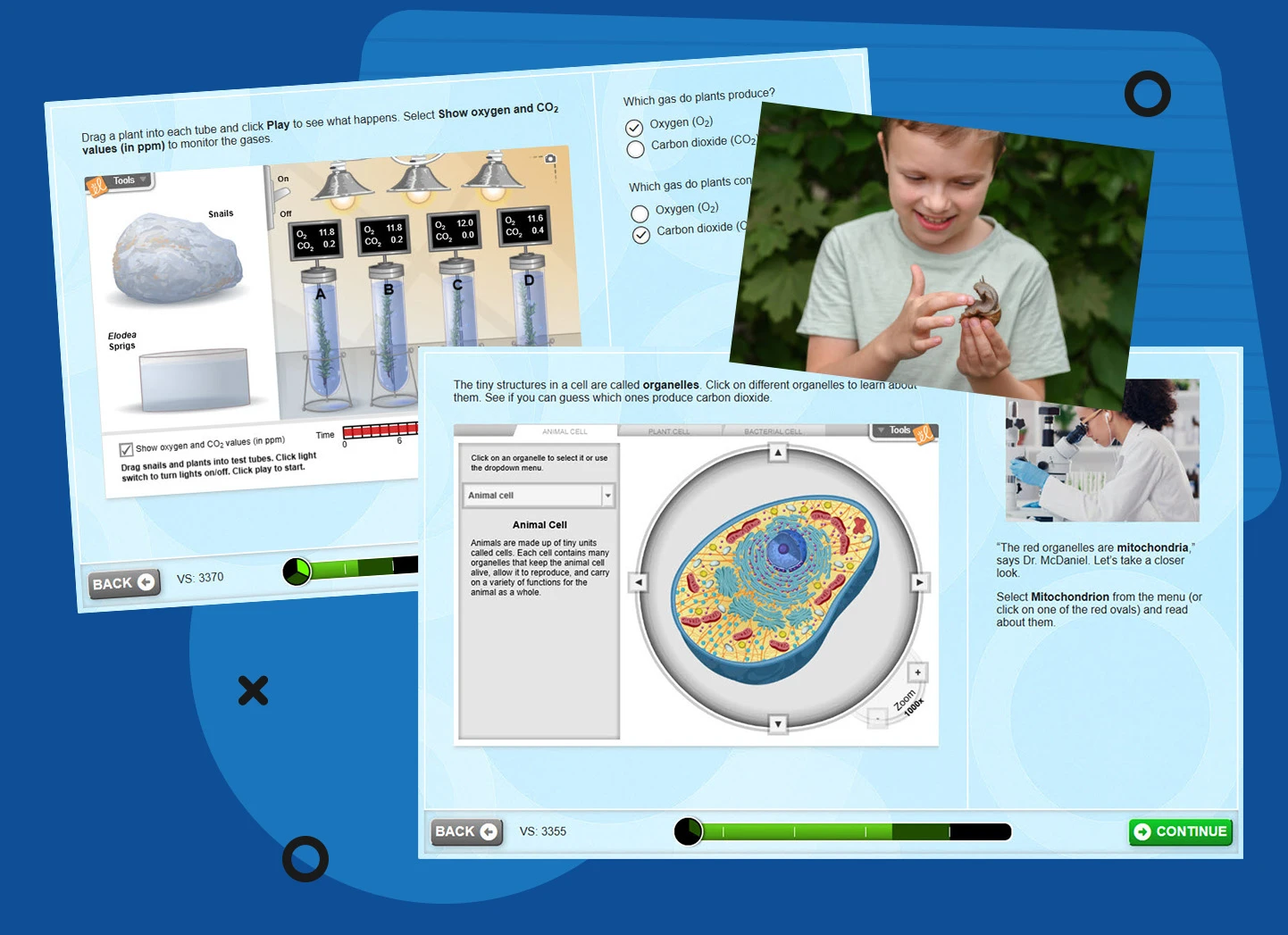
The teacher assigns a Gizmos lab to students. Gizmos provides learning objectives, key vocabulary, step-by-step instructions, an exploration sheet for students to complete as they work through the lab, and a summary quiz. The teacher can see real-time student assessment data, track student progress, and view students’ responses to evaluate critical thinking. Therefore, it is a great tool for differentiated instruction, engaging students in learning, and helping them develop critical thinking skills.
Learning Through Exploration
One of the things I like most about Gizmos is that students can learn by doing. Instead of just listening to a teacher explain a concept, students can interact with it themselves. They can change variables, make observations, test ideas, and see what happens. For example, when learning about genetics, students can use a simulation to explore different allele combinations and observe how traits are inherited. Rather than only looking at Punnett squares on a worksheet, students can manipulate the variables and see patterns develop. I think this is valuable because students do not always understand something just because it was explained to them; sometimes they must learn by doing, and Gizmos lets students experiment in ways beyond what is available in the classroom. For example, not every school has access to frogs for dissections during a biology anatomy lesson, or some students may not feel comfortable doing a dissection. Therefore, Gizmos offers a frog dissection simulation alternative so students can participate.
Additionally, students have different needs, and Gizmos is a great tech tool for kinesthetic, visual, and self-paced learners. This is because they can manipulate variables, interact with the experiment in real time, move at their own pace or repeat steps in the experiment to master a concept. This connects to my view of teaching where students should have opportunities to construct their own understanding and take an active role in their learning rather than simply memorizing and regurgitating concepts.
Making Thinking Visible
Another reason I would use Gizmos in my classroom is that they give students opportunities to make their thinking visible. I would not want students to open a Gizmo, click around, and record answers. Instead, I would build questions and discussion around the simulation and think like scientists.
For example, before students change a variable, I might ask:
What do you predict will happen (hypothesis)?
Why do you think that?
What evidence supports your prediction?
What did you observe?
Did the results match your thinking?
What would you change if you tried it again?
These questions encourage students to think about the why, rather than simply focusing on getting the correct answer. Using technology like Gizmo should not replace thinking. Instead, it should create more opportunities for thinking and make it visible.
Learning From Mistakes
Another thing I appreciate about Gizmo's simulation labs is that they create a low-risk environment for students to make mistakes. In science, mistakes can be valuable learning opportunities. Students might make a prediction that turns out to be incorrect or change a variable and get an unexpected result. Instead of seeing this as failure, I would encourage students to look at what the results taught them to build a growth mindset in science. For example, if a student predicts that increasing one variable will increase the outcome but the opposite occurs, that creates an opportunity for investigation. The student can go back, change the variable again, and look for a pattern. In classroom labs, time limits reduce opportunities to ‘play around’ with different variables. Still, Gizmos lets students take their time and investigate on their own, as long as they submit the assigned work on time. As a result, Gizmos can help create a class where students feel comfortable taking those intellectual risks.

My Takeaway
For me, this connects to the bigger purpose of teaching science. I don’t want students to leave my classroom only remembering a list of scientific facts. I want them to leave able to think scientifically. That means being curious, asking questions, using evidence, and investigating new concepts. If several students struggle with the same concept while doing the Gizmos lab, that gives me valuable information about their learning and tells me I need to address misconceptions. I am not just looking at whether students completed the activity; I am looking at how they are thinking, hence, inquiry-based learning. I see Gizmos as a tool that can help bridge the gap between learning about science and doing science. When students can manipulate variables, make predictions, observe results, and reflect on their thinking, they become active participants in the learning process. As a future teacher, I will ask what my students are thinking and how I can create opportunities for them to engage in metacognition. I will use Gizmos with intentional questions, discussion, reflection, and opportunities for students to make mistakes and learn from them. Therefore, Gizmos can become an effective formative assessment tool because I can gather evidence of their understanding, track their progress, and guide my teaching. It can make learning more interactive, exploratory, and student-centered. Overall, that is the kind of learning environment I hope to create: a classroom where students are not just told how scientific concepts work but given the opportunity to explore them for themselves.
You can access Gizmos with this link: https://gizmos.explorelearning.com/
TianaS@NUO


No comments:
Post a Comment