IvetP@NU (OTECA)
Technology has had a tremendous impact on student learning since the pandemic has begun. Technology in the classroom is essential for increasing student engagement and empowering educators to create innovative learning experiences in and out of class. It has changed education and this is due to a few reasons:
-> Technology can improve student engagement
Technology can assist students by making learning more engaging and foster collaboration. Students can learn by doing and through critical thinking. An example of this is through group discussion.
Blended Learning is when students learn online as well as through face-to-face teaching. This can also be referred to as hybrid learning. Blended learning can assist the students' learning experience by providing them with opportunities to work both independently and with their classmates and teacher to reinforce learning and achieve knowledge in the subject.
->Technology can promote innovative teaching techniques
Technology changes the way we access information, and how we are taught information. Some uses of technology that are present include watching video recorded lectures and taking part in fun interactive online games to assess the students' learning.

Matthew Marsella @ NU OTECC

Community Circles are essential, and should be implemented in classrooms. Community circles builds a community environment in the classroom; and creates a safe environment to share with one another. Through my experience as an educational assistant I have observed community circles from kindergarten to grade 5 being implemented in the classroom. When sharing, students have the option to share or pass on their turn. This makes students feel safe because no one is forced to share if they do not want to. However, even those that are not sharing are taking in information from others that are sharing, and everyone is able to learn from each other's experiences in what they have shared. Educators can also address topics of concern such restorative justice practices, in which students can share how to solve a problem that may have taken place on the playground for example. This allows students to solve problems with strategies discussed in the community circle. Community circles are successful at establishing positive relationships within the classroom and provides an opportunity for the educator to create an environment where students feel safe.
Avonit OTECC@NU
 | or advertisements. video.link |
 | St. Patrick's Day is a global celebration of Irish culture that takes place annually on March 17, the anniversary of the patron saint of Ireland's death in the fifth century. The Irish have ... |
 | St. Patrick's Day — also known as the feast of St. Patrick, the patron saint of Ireland — is a public holiday in Ireland, Newfoundland and Labrador, and the Caribbean nation of Montserrat ... |
 | Learn more about the beautiful Emerald Isle! |

5 Strategies for Aligning PBL to Real-World Problem-Solving |
The closer project-based learning comes to the messy, complicated problems of our world today, the more students benefit.  In March 2020, I faced a number of challenges as a school superintendent. Earlier in the month, I had read about a virus that was sweeping the world, and while American schools had not shuttered, the challenge seemed both eminent and far off. Over the next several weeks, months, and years, I, and every other leader, faced a series of problems, including closing schools, redesigning in-person instruction, developing virtual learning programs, and working in partnership with public health organizations. Interestingly, I learned that authentic, real-world problem-solving has a few key features:
Contemporary learning frameworks and related methodologies can learn a lot from what we are experiencing with Covid-19. Applying the two features above to project-based learning (PBL) by using a more fluid rather than static, linear model may best prepare students for what the future of learning and work actually looks and feels like. To read more, click here >>>>> 5 Strategies |

5 Tips for Teaching Novels When Students Won’t Read |
Making lessons accessible to resistant readers can enhance the learning experience for everyone—including those who read the whole book.  I first encountered a problem that every English teacher faces during my teacher preparation program: Many students were not reading. After months of reading book reviews that were frequently little more than poorly disguised plagiarized summaries, I taught in a way that penalized students who did not complete the book and rewarded students who did. Unfortunately, by the end of the semester, I was left with a handful of students who were so lost and unprepared that they could only stare at our final assessment. Instead of motivating students to read, I had effectively blocked students from accessing the learning. As a secondary English teacher, I was prompted by this experience to consider a central question in my teaching practice: How do I teach students to read great novels while providing lessons that are accessible to all students, including those who appear unwilling to read? To read more, click here >>> 5 Tips |
The Benefits of Bringing a Book Vending Machine to Your School |
A library media specialist shares logistical tips for using a book vending machine to build a strong reading community at your school. |

On the first day of school this year, our students at Frank Hebron-Harman Elementary had an extra reason to be excited: We had a brand-new vending machine in the cafeteria. But instead of dispensing snacks or drinks, our vending machine produces books, which we give to students for free on their birthdays each year.
I first heard about book vending machines at a library conference, where a university professor had experimented with putting the book vending machines in places such as free clinics and laundromats. I thought it was a fantastic way to truly spark our students’ love of reading. Over the past year, we’ve learned a lot of lessons about the logistics of supporting a book vending machine in our school. These tips and tricks have helped our vending machine program be a big success.
To read more, click here >>>> Vending Machine Benefits
Six Steps to Writing Thoughtful Report Card Comments
Need
a nudge getting started writing those report-card narratives? This six-step
plan jump-starts the process and helps you craft comments that are meaningful
to both your students and their parents.
1. Begin with an adjective
brainstorm. Create
a list of your students' names. Beside each name, jot down one or two
adjectives that describe the student as a learner, challenging yourself to
avoid repetition. To help you brainstorm, refer to Favorite Words, Phrases for Report-Card Writers. Begin
this process two weeks before you start filling in report cards so you have
ample time to find just the right descriptors for each student.
2. Take supporting notes. Once you've completed
your list of adjectives, make brief notes during class time that confirm your
observations. Virtually any situation — an exchange during a
workshop, a direct quote from a conference, an indication of growth through a
piece of writing — could inspire notes. It's more effective to
provide parents with concrete, relevant examples of their child's performance
than with broad, generic statements.
3. Use sentence stems. This is an excellent
way to get the juices flowing, especially for students who are difficult to
describe. The following stems work well:
·
Jessica's
best work this quarter was . . .
·
Jonathan
has shown improvement in . . .
·
This
term, I was glad to see Connor . . .
·
Ask
Sarah to talk about . . .
·
This
term, Melissa challenged herself by . . .
4. Focus on the positive. It's important to
emphasize what students do well so that your parents and students can build
from those strengths. Areas for improvement can be revealed through other
report-card notations, such as grades, conduct codes, or other descriptors. Often, negative adjectives
can be reworked to suggest strengths. For example, restless and easily
distracted students can be characterized as very energetic. Regardless of how
frustrating a student is, a comment space is not the appropriate place for a
disciplinary referral. A phone call to or meeting with parents is a better
course of action.
5. Write the easy comments
first. You
will develop comment-writing skills more quickly if you start with students who
are easy to describe. As your confidence grows, you'll probably find that you
have more to say about those enigmatic students than you realized.
6. Ask colleagues for help. Once you've
brainstormed some adjectives and incidents, you may want to elicit the support
of colleagues in describing challenging students. Music, physical education,
and art teachers might have been observing your students for years and could
have just the insights you need for that student you're struggling to describe.
Instructional aides and student interns may also provide valuable observations
about the students with whom they have worked.
This article originally appeared in Teacher magazine, published by Scholastic, and was written by the authors of Well-Chosen Words (© 1998, Stenhouse).
Artificial Intelligence (AI) Effects on Educational Systems
Artificial intelligence is a constellation of many different technologies working together to enable machines to sense, comprehend, act, and learn with human-like levels of intelligence. Maybe that's why it seems as though everyone's definition of artificial intelligence is different: AI isn't just one thing.
The developed countries use AI in their everyday life and this technology is a part of their educational system too. The traditional educational system is changing due to AI. AI benefits people and students in their academic life as it becomes much easier and individualized.
Based on surveys, teachers spend 43% of their time teaching, 13% lesson planning, 11% evaluating and grading, and 7% in official affairs. However, AI provides the opportunity for teachers to save their time and let the AI do most of the work. For example, ProProfs quiz maker is one of the online applications that makes exams and provides teachers with automatic/instant results.
AI facilitates learning; they break down lessons into simple parts, highlight main points and summarize lessons. They can produce visual and audio data which fastens students' understanding. An example of which is Netex Learning.
Every student learns differently from his/her peers. Teachers can't make individualized plans for every single student in class. In this case, AI helps to build individualized learning plans. AI meets the needs of students and emphasizes on certain issues. AI repeats the areas where students haven't learned and helps students to fasten their learning. This technology provides the opportunity for students of different knowledge levels to work together in a single class and facilitates teaching for the teacher. An example of this is Carnegie Learning that functions as teacher assistant.
Teachers may not always figure out students' misconceptions during a lesson. However, AI identifies the questions which most of the students answered incorrectly, notifies the teacher, and sends reflections to students followed by notepoints of the lesson.
Students can receive more support from AI. There are several educational apps that can develop students in basic mathematics, spelling, etc. these apps can only teach basic concepts and are not able to teach creativity to students.
AI also helps students to choose their field of study based on the courses they were successful in.
AI has digitized educational books with online platforms that provide the opportunity for students to participate in classrooms regardless of their place. These platforms can also translate data to various languages for all language speakers.
Duolingo is a language learning application based on AI. Duolingo has more than 300 million users around the world that individualized the application and are learning their favorite languages.
Before AI, students had to wait a long time for their teacher to respond to their questions, however, AI created chat boxes that help students find the relevant answers.
Brought to you by: Marziyeh@NU (OTECA)

Report Card Writing Strategies for First-Timers
Feeling
clueless about writing report cards? You're not alone. Few colleges offer
courses in them and most school systems don't make time to offer formal
direction to new teachers. "If it weren't for teachers around me who
helped me figure it out, I would have felt as if I were almost making it
up," recalls Kim Wilkes, a teacher in Winter Park, Florida, about her
first report-card writing experience many years ago.
"It's
a time-consuming and stressful task," says Elizabeth Rae Merrill, a
teacher in Dobbs Ferry, New York. "To do it well, you must do a serious
evaluation of the students' work as well as their in-class performances, and
then synthesize all your observations into information that's useful to parents
and students."
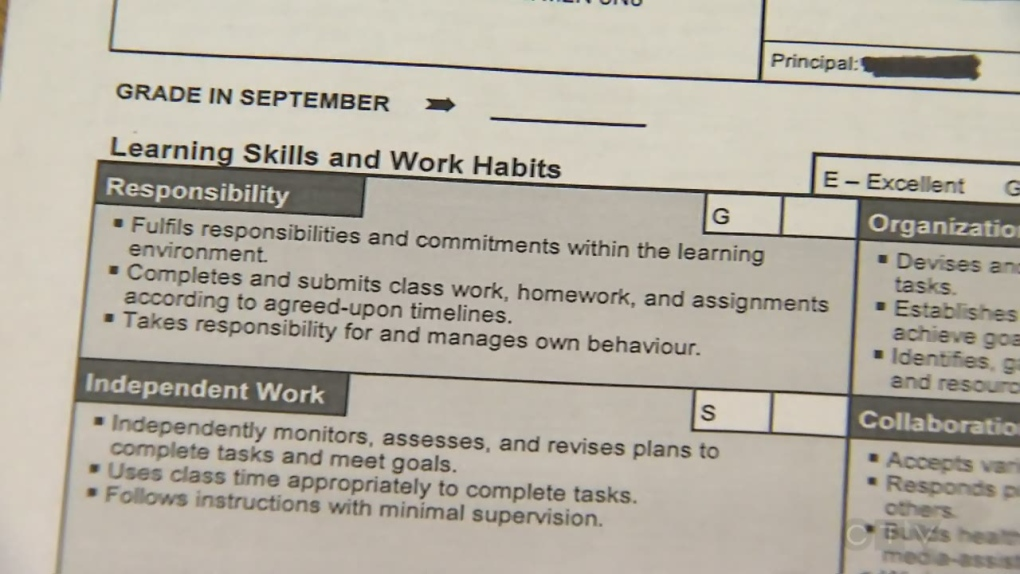
Here
are some strategies and techniques to help you get started:

This
article originally appeared in Teacher magazine, published by
Scholastic.